

Most couples choose their wedding venue for beauty, location, architecture or atmosphere — not for acoustics. Yet the way a space behaves sonically has a profound effect on how guests experience the ceremony and reception. Everything from the layout of the room to the height of the ceiling, the number of guests, the furnishings and even the flowers can influence how music sounds and how people feel within a space.
Wedding musicians understand this deeply. Many have performed in hundreds of venues — barns, chapels, glasshouses, ballrooms, marquees, terraces, galleries, and converted industrial spaces — each with its own sound signature. While guests rarely think about acoustics, they feel them immediately. A space with sympathetic acoustics feels warm, enveloping and intimate. A space with poor acoustics can feel flat, harsh or strangely quiet, even with beautiful music playing.
This article explores how acoustics influence a wedding, why some rooms feel magical and others a little tricky, and how musicians adapt to each environment to create the perfect musical balance.
1. What Are “Acoustics” and Why Do They Matter at Weddings?
Acoustics simply refers to the way sound behaves in a space. Walls, ceilings, materials, furnishings and air volume all affect:
- how sound travels
- how it reflects
- how it decays
- how guests perceive it
Wedding ceremonies and receptions depend on atmosphere. The right acoustics can make:
- live musicians sound fuller
- guests feel more relaxed
- speeches clearer
- vows more intimate
- music more emotionally resonant
Meanwhile, the wrong acoustics can create:
- muddiness
- echo
- too much reverberation
- a lifeless sound
- difficulty hearing spoken words
This is why professional musicians — including duos such as JAM Duo — place enormous importance on adapting to each venue to ensure the music complements the room.
2. Stone Halls, Churches and Grand Historic Rooms
Many UK weddings take place in historic buildings: manor houses, abbeys, village churches, stately homes, and civic halls. Their architecture often includes:
- high ceilings
- stone or marble floors
- large windows
- expansive walls
- recesses and alcoves
These characteristics create natural resonance. Sound bounces around the room, producing a warm, majestic echo.
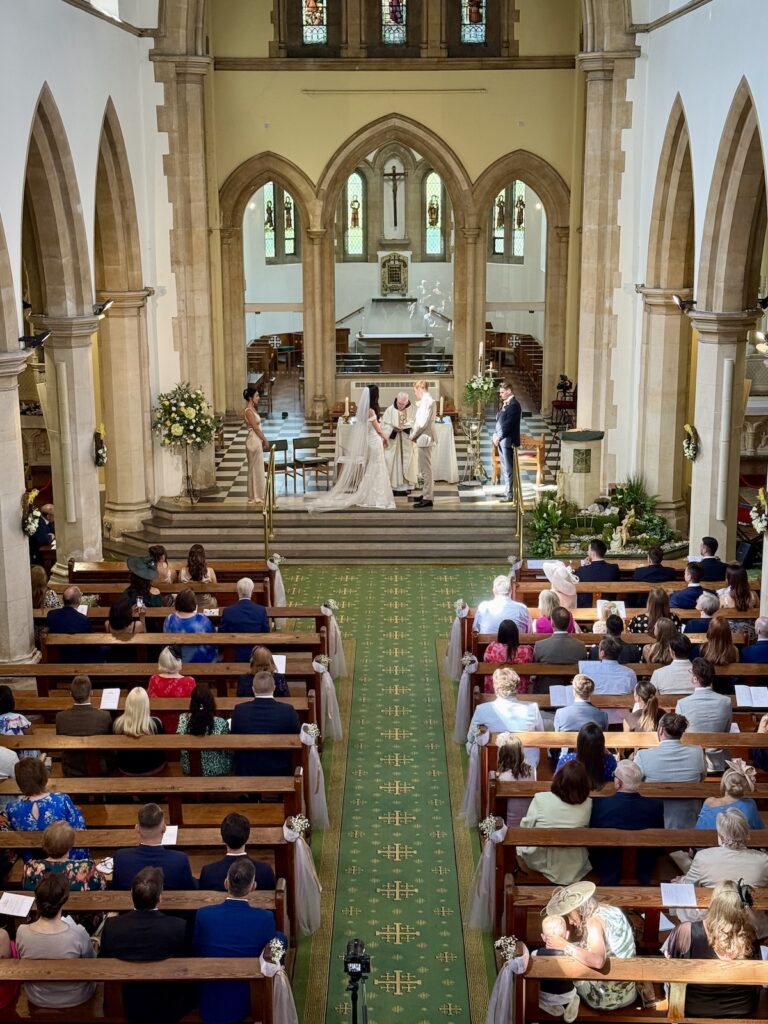
Why Stone Spaces Sound Magical
- Enveloping resonance: notes bloom and float in the air, creating emotional depth
- Long decay time: the sound lingers beautifully after it’s played
- Soft blending: cello and piano textures fuse elegantly
Ceremonies in such spaces often feel exceptionally atmospheric. The acoustic carries the music effortlessly, giving the performance a cinematic quality.
Challenges
- Too much echo can blur fast or rhythmic pieces
- Spoken words may be slightly less crisp
- The room may respond differently depending on where musicians set up
Experienced performers adapt by choosing:
- slower tempos
- lyrical repertoire
- warm, legato phrasing
- slightly reduced sustain on piano
- balanced dynamic control
A duo such as JAM Duo will often place themselves at a specific angle to the room to project sound evenly rather than directly into reflective surfaces.
3. Barns, Timber Interiors and Rustic Venues
Barn weddings remain incredibly popular. These interiors are typically warm, characterful and filled with texture. Their acoustic signature is very different from stone spaces.
What Barns Do to Sound
- Wood absorbs mid and high frequencies, giving a warm, intimate tone
- Shorter reverberation, meaning clearer articulation
- Less echo, making speech particularly easy to hear
In these environments, music feels close, personal and emotionally direct.
The Musical Effect
- Piano sounds crisper
- Cello remains warm but more focused
- Rhythmic pieces feel lively and detailed
- Lyrics (if sung) are clearer
Musicians typically play with slightly more dynamic expression in barns, as the room supports clarity without overwhelming resonance.
Potential Challenges
- Large barn doors or open ends can create sound “leaks”
- High ceilings can cause mild diffusion
- Uneven surfaces may scatter sound unpredictably
Nevertheless, barn acoustics are usually wonderfully forgiving and help create a relaxed, welcoming atmosphere.

4. Glasshouses, Orangery Rooms, and Modern Light-Filled Spaces
Glass-fronted wedding spaces are visually stunning but acoustically unpredictable. Their characteristic features include:
- large panes of glass
- hard flooring
- minimal fabric or soft furnishings
- high ceilings
These elements reflect sound sharply.
What Guests Hear
- Brighter treble
- Slightly more reflective ambience
- Increased potential for “zing” or sharpness in higher registers
How Musicians Adapt
- Softer bowing on cello
- Reduced percussive attack on piano keys
- Warmer repertoire choices
- More control over dynamic range
Live musicians also choose set-up positions carefully to avoid directing sound straight at glass surfaces.
The Psychological Impact
Bright, reflective spaces can feel fresh, airy and modern, but without careful musical adjustment, they can also feel a touch exposed. Professional musicians shape the performance to restore balance.
5. Marquees, Tipis and Tents
Outdoor structures create their own acoustic realities. Unlike stone halls or barns, marquees and tipis absorb sound rather than reflect it.
Acoustic Characteristics
- Almost no natural reverberation
- Immediate sound decay
- Fabric walls absorb mid frequencies
- Carpets or matting soften sound further
This can sometimes make music feel too “dry” or quiet.
Why Live Musicians Excel in These Spaces
Musicians can adapt instantly by:
- increasing dynamic projection
- choosing repertoire with rhythmic clarity
- using supportive amplification (if needed)
- positioning themselves strategically near open sides
A cello and piano duo can sound surprisingly beautiful in a marquee, provided the performers understand how to shape tone to compensate for the lack of natural reflection.

6. Outdoor Ceremonies: Nature’s Acoustic Wildcard
Outdoor weddings are enchanting, but acoustically they are the most unpredictable.
Why Sound Behaves Differently Outdoors
- No walls = no natural reflection
- Sound disperses quickly into open air
- Wind can carry sound in arbitrary directions
- Grass absorbs low and mid frequencies
However, outdoor spaces can also produce truly magical moments.
What Guests Experience
- A clean, natural sound
- An intimate feeling despite the open air
- A relaxed, organic atmosphere
- Subtle interaction with birdsong and natural ambience
Musicians’ Adaptations
- Slightly slower tempos to maintain clarity
- Warmer phrasing for cello lines
- Use of discreet amplification for consistency
- Adjusting seating and positioning to face the audience
- Ensuring wind screens are used on microphones
Professional duos like JAM Duo bring equipment capable of balancing outdoor sound without losing elegance.
7. The Hidden Influence of Room Layout
Even in a beautiful room with favourable acoustics, layout makes a huge difference.
Where Guests Sit
Dense clustering of chairs absorbs sound more effectively than spaced-out seating. Likewise, bodies in a room naturally act as acoustic “dampeners”. During the ceremony, a nearly full room sounds very different from an empty one during rehearsal.
Large Floral Arrangements
Flowers look stunning, but big displays near musicians or speakers absorb sound significantly.
The effect:
- warmer tone
- reduced projection
- slightly softer presence
This is why musicians often set up with clear space around them.
Furniture and Soft Furnishings
- Carpets soften sound
- Upholstered chairs reduce brightness
- Bare wooden floors increase clarity
- Drapes absorb high frequencies
Musicians read these elements instantly and modify their sound accordingly.
8. How Guest Numbers Change the Sound
The number of guests in a room significantly shifts the acoustic profile.
Small Weddings (8–40 guests)
- Clearer detail
- More intimate sound
- Subtle nuances are heard beautifully
This is why small ceremonies often feel incredibly emotional.
Medium Weddings (40–100 guests)
- Balanced acoustic response
- Warmth without excessive dampening
- Ideal conditions for most live musicians
Large Weddings (150+ guests)
- Bodies absorb a considerable amount of sound
- Musicians need greater dynamic projection
- Amplification may be used subtly to fill the space
This is one reason why professional musicians always check their balance once guests are seated.
9. How Professional Musicians Adapt in Real Time
The most important aspect of acoustics is that they are dynamic. As people move, doors open, weather shifts and the ceremony progresses, the room’s sonic behaviour evolves.
Real-Time Adjustments
Musicians constantly adjust:
- tempo
- articulation
- touch and bow pressure
- dynamic level
- interpretive phrasing
- repertoire selection
This responsiveness is what allows live music to maintain atmosphere so effectively.
Acoustics and Emotion
Different acoustics evoke different emotional reactions:
- resonant spaces feel romantic and grand
- intimate spaces feel warm and immediate
- dry spaces feel relaxed and conversational
- bright spaces feel modern and clean
Musicians blend artistic skill with acoustic awareness to shape the mood.
10. Why Understanding Acoustics Helps Couples Make Better Decisions
Couples don’t need to understand the technical details of acoustics — but knowing how spaces behave can help them make informed choices about:
- musician placement
- ceremony layout
- where to position florals
- whether subtle amplification is needed
- which pieces will sound best
- how to plan the flow of the day
This knowledge also reassures couples that if a space feels tricky, professional musicians will adapt seamlessly.
Conclusion
Every venue, from historic halls to modern glasshouses and outdoor terraces, has its own acoustic personality. These sonic qualities shape the atmosphere of a wedding, influencing how guests feel, how music resonates and how the ceremony unfolds.
Live musicians are masters of adapting to each environment — adjusting tone, repertoire and dynamics to ensure the space feels beautifully balanced. Couples may not see these adjustments happening, but they certainly feel the results.
Understanding acoustics adds a fascinating layer to wedding planning. It reveals why certain venues feel magical, why music touches guests differently depending on the room, and why live performance remains one of the most emotionally potent elements of a wedding day.