

A UK Guide to Choosing Music That Truly Fits Your Venue
When couples begin planning their wedding music, one of the most important — and most overlooked — factors is the venue itself.
Music doesn’t exist in isolation. It interacts with architecture, acoustics, atmosphere and scale. A piece that feels perfect in a country house drawing room can sound completely different in a stone church or a timber-framed barn. Understanding this relationship is the key to choosing wedding music that feels natural, elegant and effortless on the day.
In this guide, we’ll explain how different venue types influence wedding music, what works best in each space, and why live musicians make such a difference — particularly for daytime weddings in the UK.
Why Your Venue Should Shape Your Wedding Music
Wedding venues aren’t neutral backdrops. They carry:
- acoustic characteristics
- visual expectations
- emotional associations
A church invites reverence and stillness. A barn suggests warmth and informality. A country house often asks for refinement and balance.
When music aligns with those qualities, it feels instinctively right. When it doesn’t, guests may not be able to explain why — but they feel the mismatch.
This is why experienced wedding musicians don’t just ask what music you like, but where it will be played.
Wedding Music for Church Ceremonies
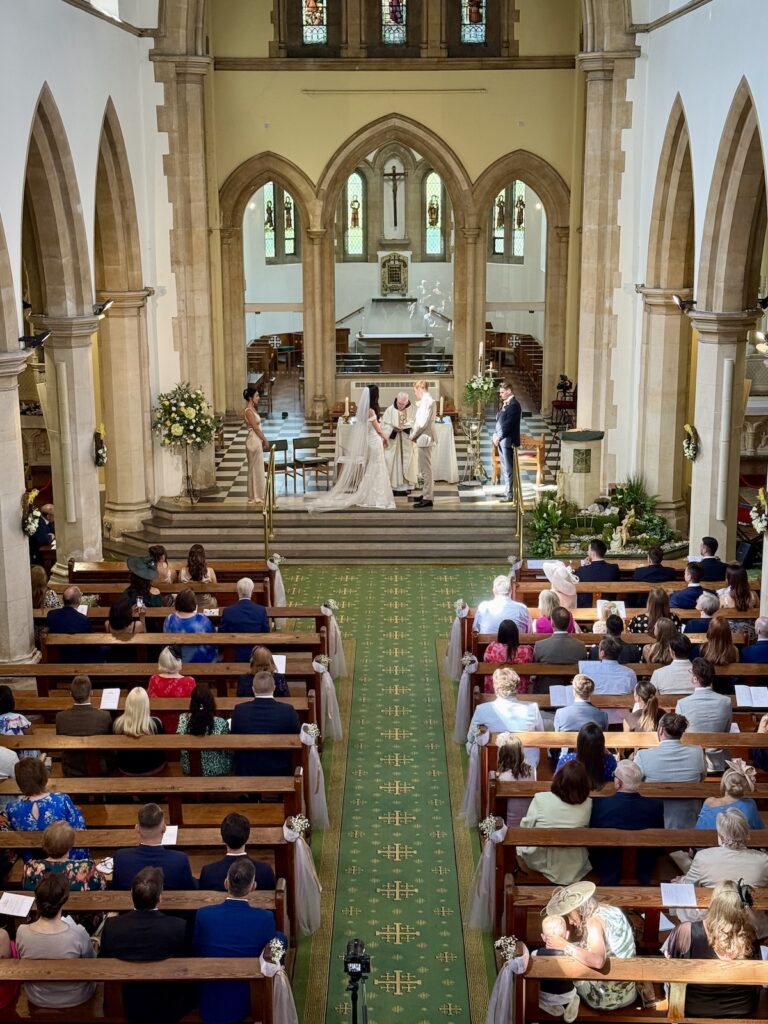
Churches remain one of the most popular wedding venues in the UK, and with good reason. They offer history, gravitas and a sense of occasion that few other spaces can replicate.
Acoustics and Atmosphere
Church acoustics are often:
- resonant
- spacious
- reflective
This means music doesn’t need to be loud to feel full. In fact, overly amplified or heavily rhythmic music can feel intrusive in a sacred space.
Live musicians who understand church acoustics will naturally:
- adjust dynamics
- pace entrances carefully
- allow sound to bloom rather than push
What Works Best in Churches
Instrumental music is particularly effective in church settings. It:
- avoids lyrical distraction
- complements spoken vows and readings
- feels timeless rather than trend-driven
Piano and cello work beautifully in churches because they offer:
- clarity without harshness
- warmth without heaviness
- emotional depth without drama
This combination supports the ceremony rather than competing with it.
Processionals and Exits in Churches
Church aisles are often longer, and walks can take more time than couples expect. Live music allows:
- flexible timing
- natural extensions or adjustments
- smooth transitions if things pause
This is one of the biggest practical advantages of live church wedding music.
Wedding Music for Barn Weddings
Barn weddings are loved for their relaxed atmosphere and characterful spaces, but they bring a very different set of musical considerations.
Understanding Barn Acoustics
Barns vary hugely, but many share:
- wooden surfaces
- open interiors
- less natural resonance
This means music needs a little more support than in a church — but still requires subtlety. Over-amplification can quickly feel harsh, while under-amplification can feel lost.
Professional musicians will:
- balance sound carefully
- use amplification sensitively
- adapt placement to the space
Musical Style for Barn Weddings
Barn weddings often suit music that feels:
- warm
- welcoming
- gently uplifting
This is where live daytime music really shines. Rather than dominating the space, it helps guests relax and settle into the rhythm of the day.
For ceremonies and drinks receptions, music should feel:
- present but unobtrusive
- stylish but informal
- carefully paced rather than showy

Why Live Music Works So Well in Barns
Barn weddings rarely run exactly to time. Live musicians can:
- extend pieces if entrances are delayed
- soften music if guests are chatting
- raise energy naturally when needed
That adaptability is invaluable in flexible, informal venues.
Wedding Music for Country House Weddings
Country houses sit somewhere between formality and comfort. They often feature:
- elegant interiors
- landscaped grounds
- multiple spaces used throughout the day
Music here needs to move seamlessly with the flow of the wedding.
Matching Music to the Setting
Country house weddings often benefit from music that feels:
- refined
- understated
- confident without being theatrical
The aim is to enhance the environment, not distract from it.
Live piano and cello are particularly well suited to these spaces, offering a sound that feels:
- polished
- timeless
- appropriate across age groups
Moving Between Spaces
One of the advantages of experienced wedding musicians is their ability to adapt as the day moves:
- from ceremony room
- to terrace or drinks area
- to wedding breakfast
This continuity helps the day feel cohesive rather than segmented.
Acoustic Considerations Couples Often Overlook
Many couples understandably focus on song choices — but acoustics matter just as much.
Things that affect sound include:
- ceiling height
- wall materials
- guest numbers
- furniture and décor
Live musicians adjust instinctively to these factors. Recorded music cannot.
This is why live wedding music often feels calmer and more natural, even at lower volumes.
Live Music vs Recorded Music Across Venues
Recorded music can work in some situations, but it is fixed. It:
- cannot respond to timing changes
- cannot adjust to room acoustics
- cannot soften or swell naturally
Live music, by contrast:
- breathes with the ceremony
- supports unexpected pauses
- adapts instantly to the room
In venues with variable acoustics — such as churches and barns — this difference is particularly noticeable.
Common Venue-Related Music Mistakes
Couples often make similar mistakes when choosing wedding music for venues:
- selecting music without considering acoustics
- assuming one setup will work in every space
- underestimating how long entrances will take
- choosing volume over atmosphere
- not allowing flexibility in timings
Experienced musicians quietly manage these issues so couples don’t have to think about them on the day.
How Experienced Musicians Adapt to Any Space
Professional daytime wedding musicians do far more than play notes.
They:
- liaise with venues and celebrants
- adjust setup discreetly
- read the room and guest energy
- manage transitions without announcement
This is particularly important in venues that host multiple weddings, where timing and sensitivity matter.
How We Approach Different Wedding Venues at JAM Duo
Every wedding we play is approached individually.
Rather than bringing a fixed “set”, we:
- adapt to the venue
- adjust to the moment
- support the flow of the day
Piano and cello give us the flexibility to move between:
- reverence and celebration
- background and focus
- stillness and warmth
Always live. Always responsive.
Final Thoughts: Let the Venue Lead the Music
The most successful wedding music choices are those that feel as though they belong in the space.
When music fits the venue:
- guests relax more quickly
- ceremonies feel calmer
- transitions feel smoother
- the day feels thoughtfully designed
If you’re planning a wedding in a church, barn or country house and would like guidance on choosing daytime music that truly suits your venue, we’re always happy to help.


