

There is a moment at every wedding that lasts only a second — and yet it changes the entire emotional temperature of the room.
It’s the instant the first note of music begins.
Guests may not consciously analyse it. Couples rarely think about it in advance. But from a musical and psychological perspective, that first sound is doing an extraordinary amount of work.
It signals that something important is happening.
It gathers attention.
It creates emotional permission.
At JAM Duo, we see the impact of this moment at almost every wedding we perform across the UK. When handled with care, the first note doesn’t just start the music — it transforms the atmosphere.
Why the Human Brain Responds So Strongly to Musical Beginnings
Our brains are highly sensitive to beginnings.
In everyday life, sudden changes in sound immediately draw our attention. It’s an ancient survival mechanism — the brain is wired to notice when the environment shifts.
In a wedding ceremony setting, this works beautifully in your favour.
When the first note sounds:
- conversations naturally stop
- heads turn toward the aisle
- posture subtly changes
- emotional focus sharpens
This happens almost instantly and largely without conscious thought.
The key is that the musical entrance needs to feel intentional and well-timed. If it does, the room settles with remarkable ease.

The Difference Between Abrupt and Intentional
Not all musical beginnings land in the same way.
An abrupt start — for example, music that begins too suddenly or at the wrong moment — can feel slightly jarring. The room responds, but not always in the most elegant way.
By contrast, a well-shaped entrance feels almost inevitable.
The difference usually comes down to three subtle factors:
1. Timing
Starting music a fraction too early or too late can affect the emotional impact.
Experienced live musicians will usually wait for:
- the visual cue that the aisle is clear
- the natural hush in the room
- the moment guests’ attention is ready to shift
That tiny pause beforehand is often what allows the first note to land beautifully.
2. Dynamic Control
Volume matters enormously in the opening seconds.
If the first note is too strong, it can feel slightly intrusive. If it’s too hesitant, it may not gather the room effectively.
With live performance, we typically shape the opening so it feels:
- confident but gentle
- present but not overpowering
- emotionally warm rather than dramatic (unless requested)
This balance helps the music support the moment rather than dominate it.
3. Tone and Texture
Different instruments create different emotional signals in the first second of sound.
For example:
- piano openings often feel clear and grounding
- cello entries tend to feel warm and human
- combined piano and cello creates immediate richness and depth
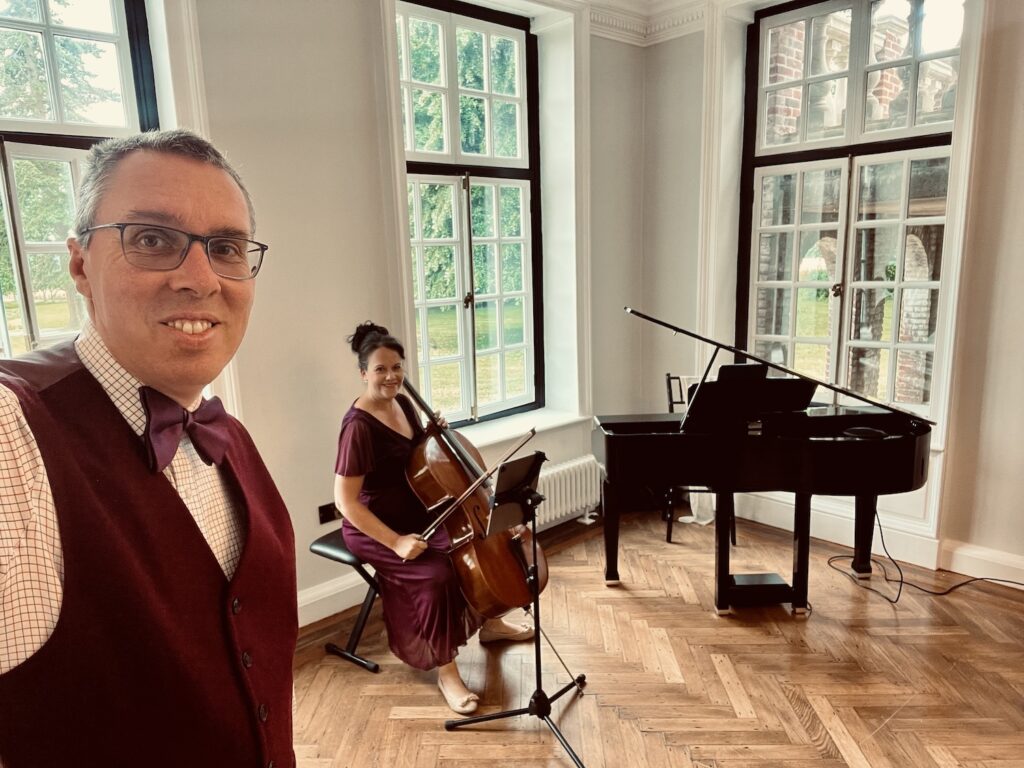
This is one of the reasons the JAM Duo sound works so naturally for ceremonies — the blend feels full and reassuring from the very first note.
Why Live Music Has a Natural Advantage
This is where the difference between live and pre-recorded music becomes particularly noticeable.
With a fixed track, the first note arrives at exactly the same volume and timing every time. There is no flexibility once the button is pressed.
Live musicians, however, are constantly reading the room.
At JAM Duo, before beginning the entrance music, we are quietly observing:
- the registrar or celebrant’s positioning
- the bridal party’s readiness
- the photographer’s cues
- the overall energy in the space
This allows us to begin at precisely the right moment — not just the scheduled one.
It’s a small detail that makes a surprisingly large difference.
The Emotional Permission Effect
One of the most fascinating aspects of the first note is what psychologists sometimes describe as emotional permission.
Weddings are unusual social environments. Guests are often unsure exactly how expressive they should be at first — how formal the tone will be, how relaxed the atmosphere is meant to feel.
The opening music quietly answers those questions.
A warm, lyrical entrance tells guests:
- it’s safe to feel something here
- this moment matters
- you are witnessing something meaningful
Within seconds, the emotional temperature of the room settles into place.
This is why the same piece of music can feel completely different depending on how it begins.
Common First-Note Mistakes
Over the years, we’ve noticed a few things that can slightly weaken this moment.
Music triggered too mechanically
If the track starts before the room is ready, the impact softens.
No pause before the entrance
Without that collective breath beforehand, the moment can feel rushed.
Volume set once and left
Rooms fill with guests, doors open, acoustics change — fixed levels don’t always adapt well.
Unclear coordination
If suppliers are not aligned on timing, the musical entrance can feel slightly out of sync.
All of these are avoidable with thoughtful planning and experienced live musicians.
How JAM Duo Approaches the First Note
For us, the first note is never just the start of a piece.
It is a carefully judged moment that sets the emotional foundation for the entire ceremony.
Our approach is always:
- watch first
- breathe with the room
- begin with intention
- shape the sound naturally
Couples often tell us afterwards that the ceremony felt calm from the very beginning. More often than not, that feeling started with the first few seconds of music.
Final Thoughts
When planning your wedding music, it’s easy to focus on the song itself — and of course, the choice matters.
But the way the music begins is just as important.
That first note gathers your guests, signals the importance of the moment, and creates the emotional space for everything that follows.
Handled well, it feels effortless.
And those are always the moments that matter most.


