

When couples enquire about JAM Duo, one of the first things they notice is the sound of the cello. Even if they’re not quite sure what the instrument is capable of, they recognise something distinctive straight away — warm, expressive, and unmistakably elegant.
The cello has a fascinating history, and interestingly, the way we often use it today at weddings — performing modern song covers and contemporary arrangements — is quite different from the purpose it was originally designed for. Yet somehow, the instrument feels perfectly at home doing both.
In this post, we thought it would be interesting to explore where the cello came from and why it has become such a powerful instrument for modern music, particularly when paired with piano.
The Origins of the Cello
The cello as we know it developed in northern Italy in the 16th century, during a time when instrument makers were experimenting with the violin family. Early makers such as the Amati family in Cremona were refining designs that would eventually give us the violin, viola and cello.
The cello’s full name — violoncello — literally means “little large viola”, which gives a hint about its role in early music. Originally, the instrument was not intended to carry melodies. Instead, it served a much more practical function.
In Baroque and early classical ensembles, the cello was part of what musicians call the basso continuo. This meant it played the bass line, underpinning the harmony and rhythm of the music while other instruments and singers carried the main melodic material.
In other words, the cello was the musical foundation of the ensemble.
It was essential — but rarely the star.
From Supporting Role to Solo Instrument
During the 18th century, composers began to realise that the cello had far greater expressive potential than simply providing the bass line.
One of the most famous turning points came with Johann Sebastian Bach’s Cello Suites, written around 1720. These pieces demonstrated that the cello could carry entire musical structures alone, with melody, harmony, and rhythm all implied within a single instrument.
Over time, composers began writing more solo repertoire for the cello. By the Romantic era, it had become one of the most expressive voices in classical music.
Composers such as:
- Dvořák
- Elgar
- Saint-Saëns
- Schumann
all wrote concertos and chamber music that showcased the cello’s remarkable emotional range.
Listeners began to associate the instrument with qualities like warmth, depth, and lyrical beauty — characteristics that remain central to the cello’s appeal today.

Why the Cello Sounds So Human
One of the reasons the cello is so emotionally powerful is that its range closely mirrors the human voice.
The instrument spans from rich, resonant bass notes up into a warm tenor register — very similar to the way singers move through their vocal range. This allows the cello to perform melodies in a way that feels natural and expressive, almost like a singer without words.
Unlike many instruments, the cello also has enormous flexibility in tone.
A cellist can shape the sound in countless subtle ways:
- varying bow pressure
- adjusting vibrato
- shaping the attack of each note
- moving seamlessly between lyrical and rhythmic playing
This expressive control allows the cello to communicate emotion extremely directly, which is one reason it works so well in wedding music.
The Cello and Modern Song Covers
Interestingly, the cello was never originally designed to perform pop songs, film music, or contemporary arrangements.
Yet today, it is one of the most popular instruments for instrumental covers.
Why?
Because many modern songs rely heavily on melody and emotional phrasing, and the cello is uniquely equipped to deliver exactly that.
Take almost any well-known song — whether it’s from a film soundtrack, a modern pop artist, or a classic love song — and you’ll find that the melody often sits beautifully within the cello’s range.
Instead of sounding like a simple instrumental version, the cello can make the melody feel almost vocal, preserving the emotional character of the original song.

Why Piano and Cello Work So Well Together
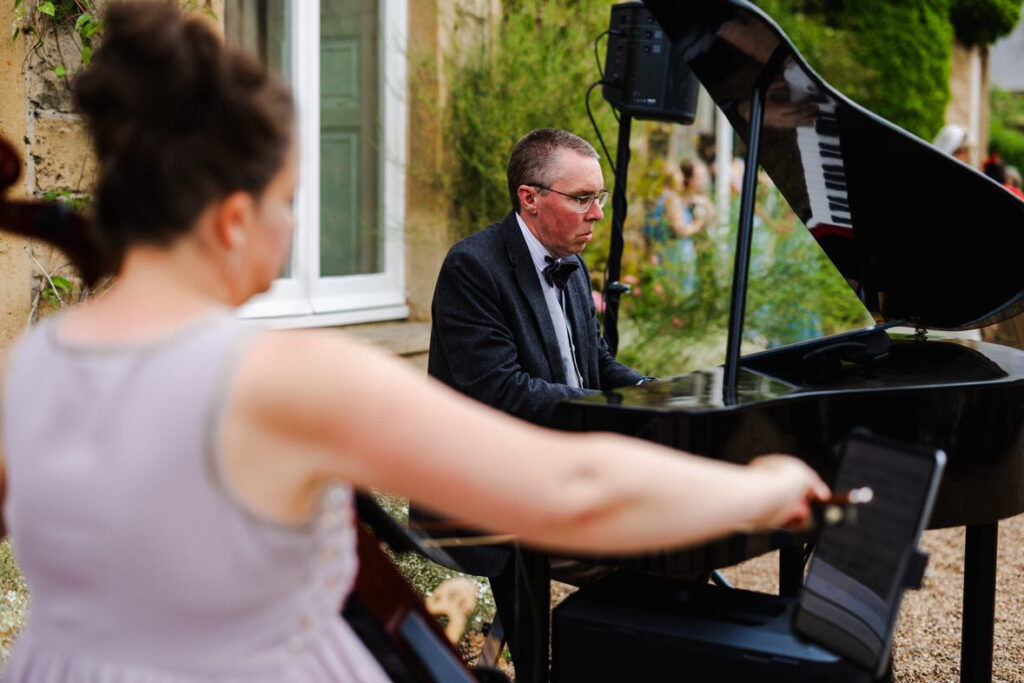
At JAM Duo, the cello is paired with piano — a combination that has been part of classical chamber music for centuries.
The pairing works particularly well for modern arrangements because the two instruments naturally divide the musical roles.
The piano provides structure:
- harmony
- rhythm
- bass line
- musical texture
Meanwhile the cello carries the melody, shaping the musical line in an expressive, almost vocal way.
This balance allows songs to retain their recognisable character while gaining something new — a richer, more intimate sound.
Many couples tell us they love hearing familiar songs in this format because it feels both modern and timeless at the same time.
A Natural Fit for Weddings
Although the cello’s history stretches back more than 400 years, it feels remarkably suited to modern weddings.
Part of this is simply the sound of the instrument. The cello has a warmth that fills a room without ever feeling overpowering, which makes it ideal for moments such as:
- guest arrival music
- the bridal entrance
- signing of the register
- drinks receptions
It adds atmosphere and elegance while still allowing conversation and the natural flow of the day to continue.
But there’s another reason the cello works so well.
Because it is capable of both classical repertoire and contemporary songs, couples don’t have to choose between tradition and personality. A ceremony might include something timeless such as Bach or Pachelbel alongside a favourite modern song — all performed in a style that feels coherent and elegant.
A Versatile Instrument With a Long History
From its beginnings as a supporting bass instrument in 16th-century ensembles to its role today in contemporary song arrangements, the cello has evolved enormously over the centuries.
What hasn’t changed is the instrument’s extraordinary ability to connect emotionally with listeners.
Whether performing classical repertoire, film music, or modern songs arranged for cello and piano, the instrument brings a depth of tone that few others can match.
For us in JAM Duo, it’s one of the reasons the combination of piano and cello works so well for weddings. Familiar songs gain a new richness, while the overall sound remains elegant, natural, and entirely live.
Hear the Cello in Action
If you’re curious how modern songs sound arranged for cello and piano, you can explore a selection of our recordings on the JAM Duo Listen page, where we’ve recorded hundreds of pieces for inspiration.
Each arrangement is performed completely live — just piano and cello — showing how beautifully the cello adapts to music written centuries after the instrument itself was first created.


