

The chairs are still being moved, the flowers haven’t quite appeared and somebody has just decided the aisle needs to be six inches wider. Meanwhile, the first guests are arriving. Welcome to the final fifteen minutes before a wedding ceremony.
There is something rather extraordinary about the amount of planning that goes into a wedding, only for the final few minutes before the ceremony to descend into what can occasionally resemble a furniture removal exercise. Months have been spent choosing flowers, discussing seating plans, arranging music and deciding precisely which shade of ivory the table decorations should be. Yet, with guests already arriving, somebody suddenly decides that the chairs need moving.
As wedding musicians, we’ve seen this happen on more than one occasion. And whilst it might seem like a relatively minor detail, having the ceremony room properly prepared before guests arrive makes an enormous difference to the atmosphere of the wedding.
The Ceremony Begins Before the Couple Arrives
One of the things we regularly explain at JAM Duo is that the wedding ceremony doesn’t really begin when the bride or couple makes their entrance. From a guest’s perspective, it begins when they walk into the room.
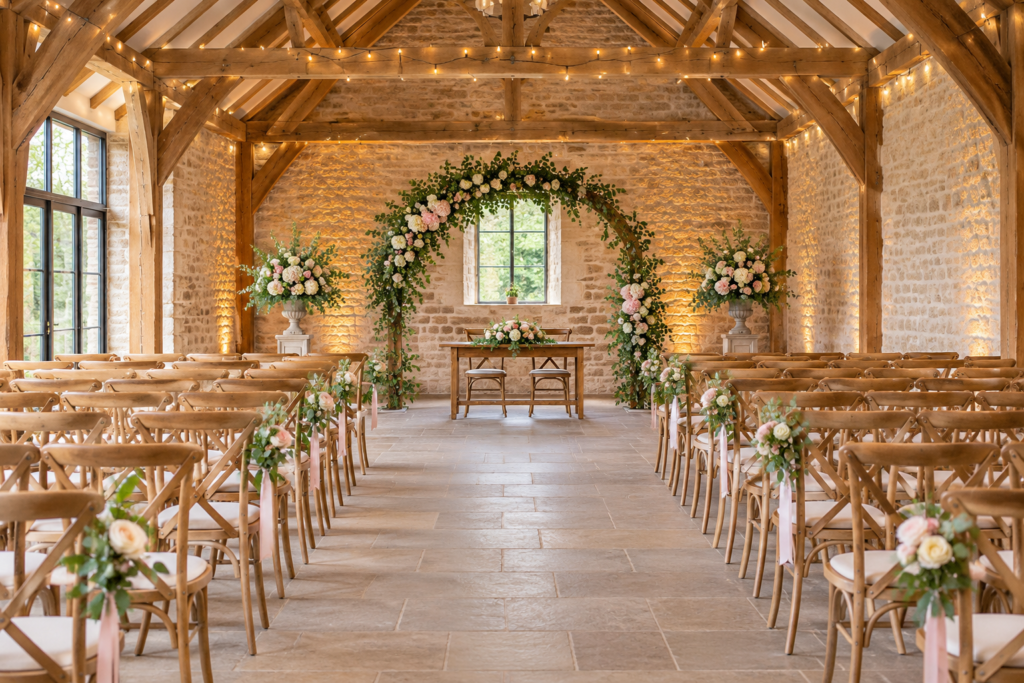
Those first few minutes establish the atmosphere. Guests take their seats, admire the flowers, greet people they recognise and enjoy the anticipation of what’s about to happen. Ideally, there should be a sense of calm, with everything in place and the room looking exactly as the couple intended.
Live music can contribute enormously to this. We generally provide around fifteen minutes of music immediately before the ceremony, creating a gentle transition between guests gathering and the formal proceedings beginning.
But there’s only so much atmosphere you can create whilst somebody is dragging chairs across a wooden floor.
The Last-Minute Furniture Shuffle
Wedding venues are busy places, and it’s perfectly understandable that ceremony rooms sometimes need to be used for different purposes throughout the day. Some venues host several parts of the wedding in the same room, meaning furniture and decorations must be moved between the ceremony, drinks reception and wedding breakfast.
There’s nothing inherently wrong with this. A good venue team will usually manage these changes with remarkable efficiency, often transforming a room completely whilst guests are enjoying a glass of something elsewhere.
The difficulty comes when the initial ceremony layout hasn’t been completed before the guests arrive.
We’ve witnessed occasions where chairs are still being positioned, decorations are being adjusted and members of staff are discussing the layout whilst guests are already trying to settle into their seats. Sometimes there’s a perfectly reasonable explanation. Perhaps a previous event overran, access was delayed or a supplier arrived later than expected.
On other occasions, it simply appears that nobody has quite appreciated that the room needs to be finished before the doors open.
The result isn’t usually a disaster. Weddings are remarkably resilient occasions, and most guests are far too polite to complain. But it can make those opening moments feel unnecessarily chaotic.
Why Fifteen Minutes Isn’t Always Enough
One of the most common assumptions in wedding planning is that guests will arrive neatly fifteen minutes before the ceremony, take their seats immediately and remain quietly in position until the entrance music begins.
In practice, human beings are rather less cooperative.
Some guests arrive half an hour early because they’re terrified of being late. Others appear with two minutes to spare. There are coats to remove, handbags to rearrange, relatives to greet and occasional disagreements about who is supposed to sit where.
Guests also have an extraordinary ability to congregate in doorways, particularly when someone is trying to get through carrying something large.
For that reason, it’s worth distinguishing between the time guests begin arriving at the venue and the time they should actually start taking their seats.
If your ceremony is at 2pm and guests are invited to sit from 1.45pm, the room really ought to be completely ready before 1.45pm. Ideally, everything should have been checked and finished rather earlier.
That includes the chairs, flowers, aisle decorations, signing table and any equipment being used by musicians, celebrants or other suppliers.
Give Your Suppliers a Chance to Prepare Properly
Another reason to have the room ready in good time is that several suppliers may need access to the ceremony space before guests enter.
Photographers will want to capture the room looking its best, ideally without three members of staff carrying chairs through the background. Videographers may need to position cameras or check their equipment. Musicians need time to set up, check the sound and make sure everything is ready.
At JAM Duo, we aim to be fully prepared before we begin playing for the guests. Once the music starts, our attention should be on the ceremony and the people arriving, not on moving equipment or trying to establish whether we’re supposed to be in a different corner of the room.
This is particularly important when the ceremony involves live musicians. Unlike pressing play on a speaker, live music requires instruments to be positioned sensibly, with consideration given to visibility, acoustics, power and the movement of the wedding party.
None of this is especially complicated, provided there’s enough time and the arrangements have been agreed beforehand.
The last fifteen minutes before a ceremony are not really the ideal moment to discover that the musicians have been allocated the same space as the flower arrangement.
Who Is Actually Responsible for the Room?
This is something worth establishing with your venue before the wedding.
At a dedicated wedding venue, there will often be an experienced coordinator or events manager overseeing the preparations. In a hotel, country house or other multi-purpose venue, responsibilities may be divided between several members of staff.
If you’re using a village hall, private property or a venue where you’re organising everything yourselves, you may need to appoint somebody specifically to oversee the room.
The important thing is that one person knows what the finished arrangement should look like and has the authority to make decisions before guests arrive.
Otherwise, it’s remarkably easy for several well-meaning people to become involved, each with a slightly different interpretation of the seating plan.
This can be particularly relevant when couples have hired decorations or furniture from external suppliers. The company delivering the chairs may not be the same people arranging them, and neither may know exactly where the florist intends to put the aisle decorations.
A little coordination in advance can avoid a surprisingly large amount of activity on the day.
Our Advice: Build in a Proper Preparation Window
We’d suggest treating the ceremony room as a finished space well before the first guest is invited inside.
As a practical guide:
- Aim to have the main room layout finished at least 30 minutes before guests are seated. This gives everyone time to check the arrangements and make minor adjustments.
- Confirm who is responsible for the final room check. One clearly identified person is much better than several people assuming somebody else is dealing with it.
- Allow musicians, photographers and videographers access before the guests arrive. Agree access arrangements in advance, particularly if the venue is being used for another event.
- Check the aisle and entrance route. Make sure decorations, furniture and equipment don’t obstruct the wedding party.
- Avoid unnecessary changes once guests start taking their seats. Unless something genuinely needs correcting, leave the room alone and allow the atmosphere to develop.
These aren’t rigid rules. Every venue is different, and some ceremony spaces can be prepared hours in advance whilst others have much tighter turnaround times. The important thing is to plan realistically rather than assume everything will somehow fall into place at the last moment.
The Difference Between Organised and Rushed
One of the pleasures of playing at so many different wedding venues is seeing how the best teams operate.
In a well-organised venue, the ceremony room is usually ready long before anyone notices. The flowers are in place, the chairs are straight, the musicians are prepared and the person coordinating the ceremony knows exactly what’s happening next.
Guests arrive, take their seats and enjoy the occasion. Nobody gives a second thought to how much work has gone into making everything look effortless.
And that’s precisely the point.
Good organisation is often invisible. You only really notice it when it’s missing.
At the other end of the scale, we’ve encountered weddings where people are still discussing practical arrangements moments before the ceremony. These occasions generally work out perfectly well in the end, but they could have been considerably more relaxed with a little additional preparation.
Your wedding day will probably contain a few unexpected moments. Most do. A guest will be late, somebody will misplace something or the weather will decide to ignore the forecast.
You can’t plan for everything, but you can make sure the chairs are in the right place.
Let the Music Set the Scene
For us, the period immediately before a wedding ceremony is one of the most enjoyable parts of the day. There’s a particular atmosphere as guests settle, conversations become quieter and everyone begins looking towards the entrance.
A cello and piano playing live can make those moments feel very special, especially when the room is ready and there’s nothing to distract from the anticipation.
At JAM Duo, we provide live cello and piano music for wedding ceremonies across the UK, including music as guests take their seats, the entrance, signing of the register and the recessional.
We also offer an extended Guest Arrival music option for couples who would like live music as guests gather at the venue before the usual pre-ceremony seating period.
Whichever option you choose, our advice remains the same: give yourselves, your venue and your suppliers enough time to prepare properly.
The final few minutes before your wedding ceremony should be spent enjoying the anticipation of what’s about to happen.
Not wondering why somebody is still moving the chairs.
Planning your wedding ceremony? Explore our wedding music options and discover how live cello and piano music can help create the right atmosphere from the moment your guests arrive.