

One of the most common things couples assume is that wedding music works the same everywhere. In reality, the environment changes everything.
An elegant stone chapel, a glass-fronted orangery, a barn in the countryside, or a windswept garden ceremony all shape how music is heard and felt. As live musicians, we don’t just turn up and play — we constantly adapt to the space around us. The difference between indoor and outdoor weddings isn’t simply aesthetic; it’s acoustic, practical, and emotional.
Understanding how music behaves in different settings helps couples make better decisions and ensures the atmosphere they imagine actually happens on the day.
The Acoustic Advantage of Indoor Spaces
Indoor venues naturally support live music. Walls, ceilings, and floors reflect sound back into the room, creating warmth and resonance. Even a relatively small space can feel full and immersive when music is played live.
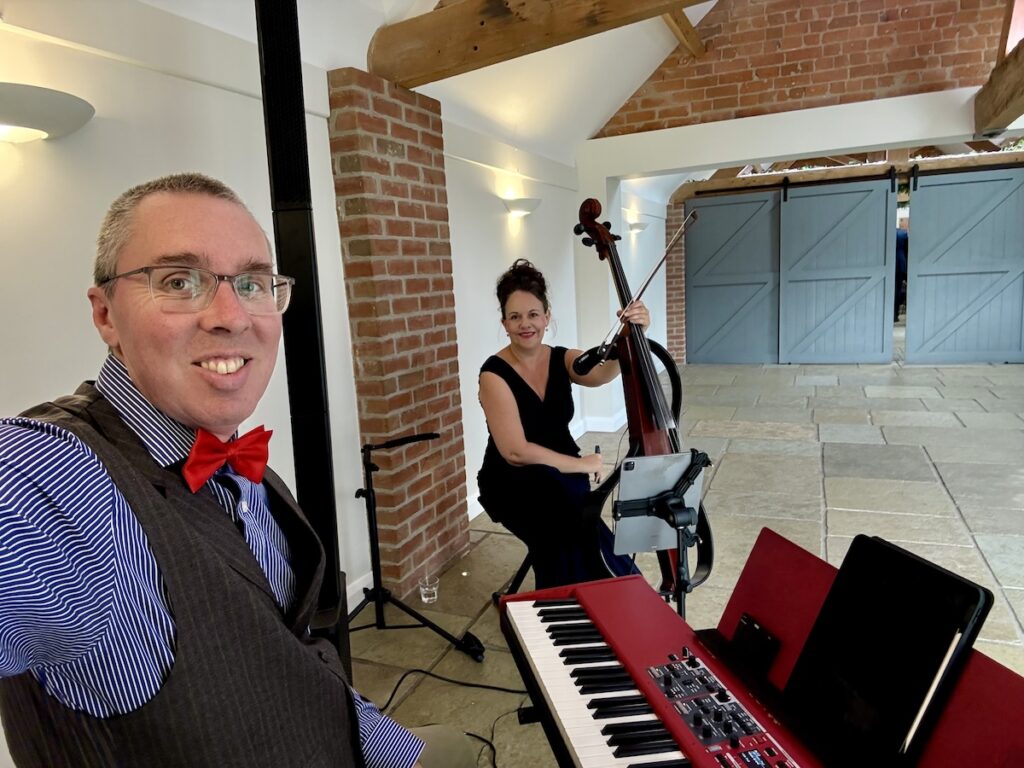
Historic buildings and traditional ceremony rooms are particularly forgiving. Stone and wood surfaces add character and depth, allowing instruments like piano and cello to blend beautifully. Guests don’t need the music to be loud; they simply feel surrounded by it.
This is why indoor ceremonies often feel intimate and emotionally charged. The sound stays contained. It travels gently but clearly. Every note contributes to the atmosphere without competing with the space.
For musicians, indoor settings allow for more nuance. We can play softly and still reach the back of the room. Subtle dynamics — crescendos, delicate phrasing, expressive rubato — remain audible. These details are what make live music feel personal rather than background noise.

The Challenge and Beauty of Outdoor Weddings
Outdoor weddings offer a completely different experience. They are visually stunning, but acoustically they behave almost like the opposite of an indoor venue.
Outdoors, sound has nothing to bounce off. It disperses into open air. Without adaptation, even excellent musicians can seem distant or faint simply because the environment absorbs and scatters the sound.
This doesn’t mean outdoor weddings are problematic — far from it. They simply require thoughtful planning and professional equipment.
At JAM Duo, we treat outdoor performances as a separate discipline. Discreet amplification ensures clarity without overwhelming the natural setting. The goal is never volume for its own sake. It’s about maintaining presence and warmth so guests can engage with the music without strain.
Weather also plays a role. Temperature, humidity, and wind all affect instruments and sound projection. Experienced musicians plan for these variables, positioning equipment carefully and adjusting in real time as conditions change.
When done well, outdoor music has a unique magic. It feels expansive and relaxed. The sound becomes part of the landscape rather than confined within walls.


How Repertoire and Style Shift with the Setting
The environment influences not just volume, but musical choices.
Indoor ceremonies often support slower, more reflective pieces. The contained acoustics allow sustained notes and quiet passages to linger beautifully. Romantic ballads and classical works can unfold with full emotional weight.
Outdoors, clarity becomes more important than sustain. Pieces with clear melodies and rhythmic definition tend to carry better in open air. This doesn’t limit the repertoire; it simply shapes how we interpret it. Arrangements may be adjusted subtly to suit the environment, ensuring every guest can follow the music comfortably.
During drinks receptions, the difference becomes even more noticeable. Indoors, music blends into conversation naturally. Outdoors, we shape the performance to sit slightly forward in the soundscape so it remains present without dominating the space.
The Importance of Professional Equipment
One of the biggest misconceptions about outdoor weddings is that amplification is optional. In reality, it is essential.
Professional sound systems designed for live instruments preserve tone and balance. They don’t make music feel artificial; they make it audible. The best systems are compact, elegant, and visually unobtrusive. Guests often don’t notice them consciously — they simply experience clear, comfortable sound.
Power solutions are equally important. Many outdoor locations lack convenient electricity, so reliable battery systems and contingency planning become part of the musicians’ preparation. These practical details are invisible to guests but crucial to a seamless performance.
Reading the Space in Real Time
Perhaps the most important adaptation is responsiveness.
Every venue — indoor or outdoor — has its own personality. Empty rooms sound different once filled with guests. Soft furnishings absorb sound. Open doors change projection. Weather shifts throughout the day.
Professional musicians constantly listen to the room and adjust accordingly. We refine balance, articulation, and dynamics moment by moment. This ability to respond in real time is what distinguishes live performance from recorded music.
It ensures that whether a couple chooses a grand indoor ceremony or an open-air celebration, the music always feels intentional and perfectly placed.
Choosing the Right Approach for Your Wedding
There is no universal “better” choice between indoor and outdoor weddings. Each offers its own atmosphere and emotional tone.
Indoor spaces create intimacy and acoustic richness. Outdoor settings provide openness and visual drama. The key is recognising that music must be tailored to the environment rather than treated as a fixed element.
When musicians understand both worlds — and prepare properly for each — couples can choose their setting freely, confident that the music will enhance rather than struggle against the space.
At its best, wedding music should feel effortless. Guests rarely think about acoustics or equipment. They simply experience a day that flows beautifully, supported by sound that fits the setting perfectly.
And that quiet alignment between music and environment is what turns a beautiful venue into a truly memorable celebration.


